






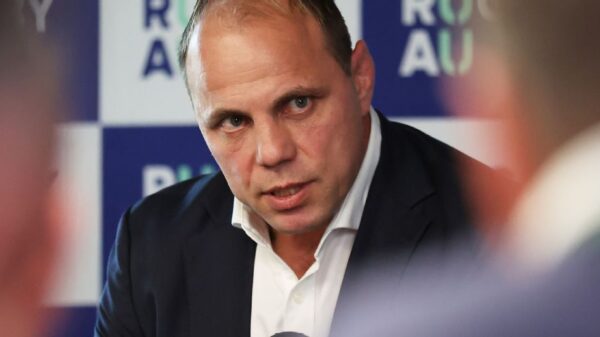




Scott Robertson has officially taken charge as All Blacks head coach, assuming the reins at the start of November. The man who waited years in the wings finally has the job — but the Scott Robertson All Blacks era begins not with a fanfare, but with a mountain of rebuilding work and a changing of the guard unlike anything New Zealand rugby has seen in two decades.
Scott Robertson All Blacks Era: What Ian Foster Left Behind
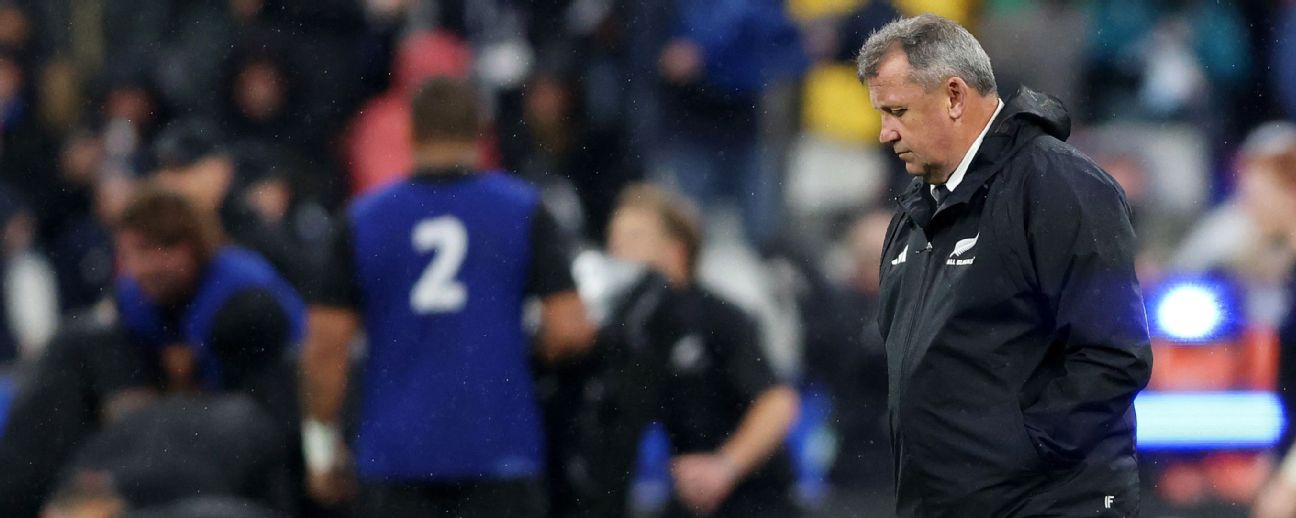
To understand the scale of Robertson’s task, you have to sit with Ian Foster’s turbulent four-year tenure for a moment. Foster never had the public’s backing — not from day one. Promoted from Steve Hansen’s backroom staff after the 2019 World Cup semifinal exit, he was always the people’s second choice. Robertson was who New Zealand wanted, and Foster spent four years fighting that reality.
The lows came thick and fast. A first-ever defeat to Argentina in 2020. Back-to-back losses to Ireland and France on the 2021 northern tour. Then the hammer blow — a home series defeat to Ireland in mid-2022 that forced Foster to cut assistants John Plumtree and Brad Mooar. BBC Sport covered the fallout extensively, and it was brutal reading for New Zealand rugby.
However, that crisis sparked genuine change. Bringing in Jason Ryan — Robertson’s trusted lieutenant at the Crusaders — as forwards coach proved transformative. Ryan openly admitted the All Blacks pack had been diminished, then set about dismantling that reputation, rebuilding the set-piece and maul into weapons once more. Furthermore, a backs-to-the-wall victory at Ellis Park in South Africa steadied the ship, before Joe Schmidt joined as a full-time assistant covering breakdown, defence, and attack. Foster, remodelled coaching staff and all, was confirmed to lead the All Blacks through to the World Cup.
Yet even then, NZ Rugby had already decided to appoint Foster’s successor before the tournament. Robertson was confirmed mid-cycle, a deeply uncomfortable situation that poisoned any prospect of a smooth handover. Consequently, there will be no shared dossier, no collaborative transition. It is, by all accounts, a clean break.
The Legends Are Gone — Now Robertson Must Find New Ones
Foster ultimately bowed out on the grandest stage. Despite the All Blacks suffering their heaviest ever defeat to the Springboks at Twickenham and a first World Cup pool-stage loss, Foster’s side regrouped brilliantly. They designed a defensive system specifically to dismantle Ireland — the world’s top-ranked side — and delivered one of their finest World Cup knockout performances, overcoming two yellow cards to end Ireland’s 17-match unbeaten run in the quarter-finals. They then fell one agonising point short of the Springboks in the final, discipline proving their undoing. Foster finished with 32 wins, 12 losses and two draws — a 69.5% win rate, placing him 17th among All Blacks coaches who led four or more Tests. Not the legacy he deserved, perhaps, but not the disaster his critics craved either. You can read more on that extraordinary week in our Rugby World Cup final piece.
Now Robertson inherits the wreckage and the brilliance simultaneously. Brodie Retallick, Sam Whitelock, Richie Mo’unga, Aaron Smith, and Dane Coles have all departed. Leicester Fainga’anuku, Shannon Frizell, and Nepo Laulala leave further gaps. Sam Cane and Ardie Savea return from six-month sabbaticals in Japan, while Beauden Barrett’s future remains unresolved. Schmidt, defence coach Scott McLeod, and scrum coach Greg Feek also walk out the door — taking enormous institutional knowledge with them, possibly to rival nations.
Robertson’s inexperienced coaching panel — Scott Hansen, Leon MacDonald, Jason Holland and Ryan — will bring fresh energy and vision. Nevertheless, they will make mistakes. Damian McKenzie steps into first five-eighth, though he remains unproven in that role at Test level. The captaincy looks likely to fall to Scott Barrett, with one eye already fixed on the next World Cup cycle. England arrive in July. The expectations, as always with the All Blacks, are impossibly high. ESPN UK will be watching every move.
Robertson is well-liked — certainly more warmly received than Foster ever was — but that goodwill evaporates quickly in this job. Anyone expecting the new-look All Blacks to steamroll the opposition from the off needs a reality check. The Crusaders are not the All Blacks. Super Rugby dominance does not translate automatically to Test rugby. Robertson’s most important work this southern summer is absorbing the hard-won lessons of the last four years — because there is no template for navigating the Test arena. There never was.