


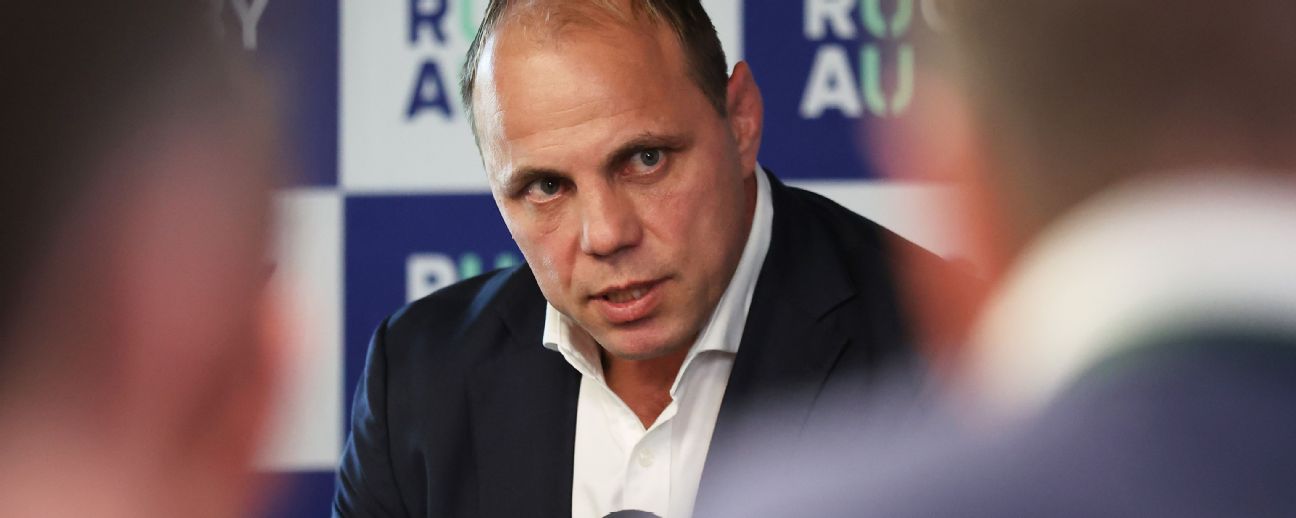
Rugby Australia’s pursuit of alignment has become the sport’s cruellest joke. While the governing body preaches centralisation and unified direction, the organisation spent 2023 contradicting itself at every turn — and the fallout from Eddie Jones’ departure has only made matters worse.
Rugby Australia’s Alignment Crisis Laid Bare
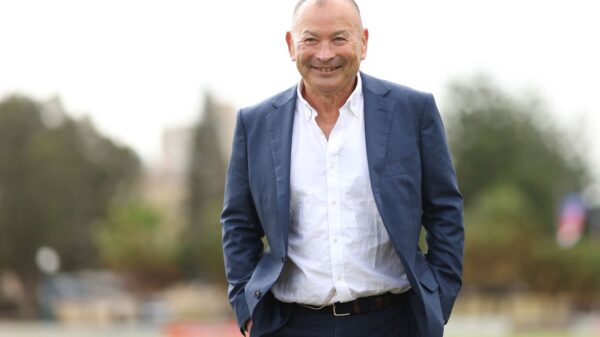
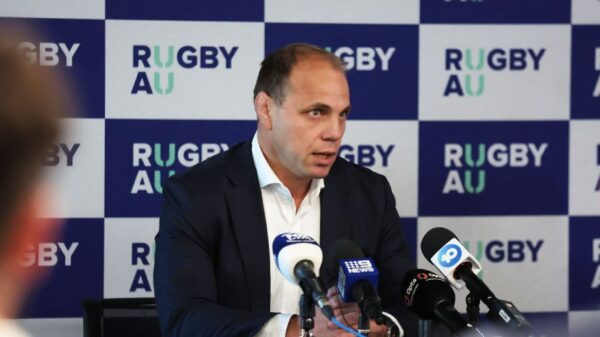
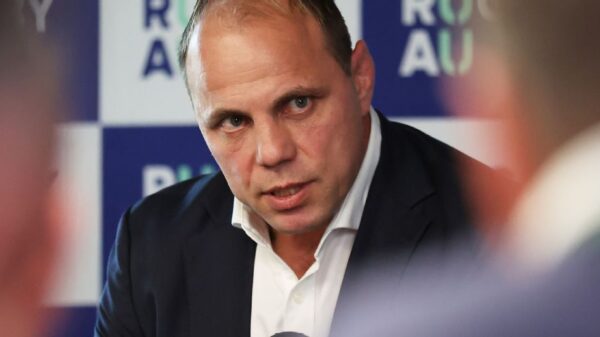
Ten Wallabies have reconvened with their now-former head coach in Cardiff, where the Barbarians face Wales this weekend. That group includes Michael Hooper, who Jones branded “not the right role model” for Australia’s Rugby World Cup campaign — a comment RA chief executive Phil Waugh labelled “absolutely unfair” on Tuesday. Waugh is almost certainly right on that specific point. Nevertheless, Waugh, chairman Hamish McLennan, and Jones himself have collectively exhausted the patience of Australian rugby supporters.
The core problem is straightforward: for all their talk of streamlined pathways and joined-up thinking, these three men were never remotely aligned on what the Wallabies were actually trying to achieve at Rugby World Cup 2023. Waugh insisted on Tuesday that Australia travelled to France to win the Webb Ellis Cup. Full stop. Yet that claim crumbles immediately under scrutiny.
Jones named a squad in August featuring Carter Gordon and Ben Donaldson as the only playmaking options — two youngsters who between them had not even accumulated ten caps. That is not a selection designed to conquer the world. Meanwhile, McLennan told ESPN on 16th August that the French campaign was fundamentally about building towards 2027. “To me, it’s all about ’27 and working backwards really,” McLennan said, explicitly citing the British and Irish Lions tour and the home World Cup as RA’s true priorities. Waugh, evidently, did not get that memo.
A Season of Shifting Narratives and Broken Trust
Furthermore, Waugh tangled the messaging further when he declared that winning “between World Cups” matters more to him than World Cup success itself — pointing to Ireland’s provincial dominance as the model to follow. That is a reasonable long-term philosophy. However, it sits awkwardly alongside his insistence that the squad flew to France to lift the trophy.
Underneath all of this chaos sits the original sin: McLennan effectively made a “captain’s pick” sacking Dave Rennie to install Jones, whose entire final chapter with England centred obsessively on delivering World Cup glory. Former RA chief executive Andy Marinos had resisted both that appointment and the blockbuster deal to sign NRL star Joseph Suaali’i. Six months later, Marinos was gone. He declined to comment when approached by ESPN this week.
Rennie, for the record, posted a 37 per cent winning rate in 2022 — a full 15 per cent better than Jones’ 2-7 return this season — yet received none of the institutional cover now being extended to those who replaced him. As former Wallabies captain Stephen Moore noted during the tournament, RA’s senior administrators have been “shifting the narrative” for far too long.
The Wallabies’ disastrous campaign, which began on 16th January, can finally be buried. Yet the structural rot remains. The Reds and Brumbies are already pushing back against various elements of RA’s centralisation plan — and frankly, given the incoherent messaging from Moore Park throughout 2023, who could blame them? The level of trust between the governing body and its stakeholders is essentially at zero. Before RA attempts the monumental task of uniting Australian rugby from top to bottom, it might want to start somewhere simpler: getting its own house in order. For fans who’ve followed the next generation of Wallabies talent trying to build something real, the least they deserve is a governing body that speaks with one voice.