


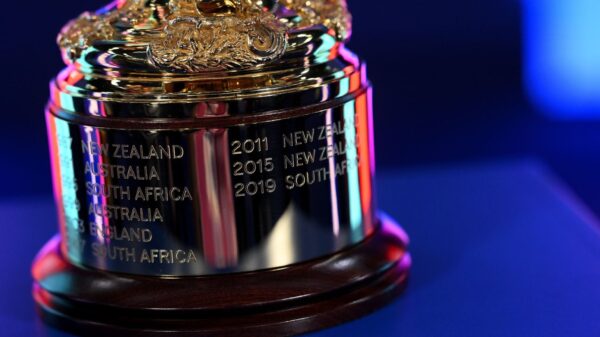
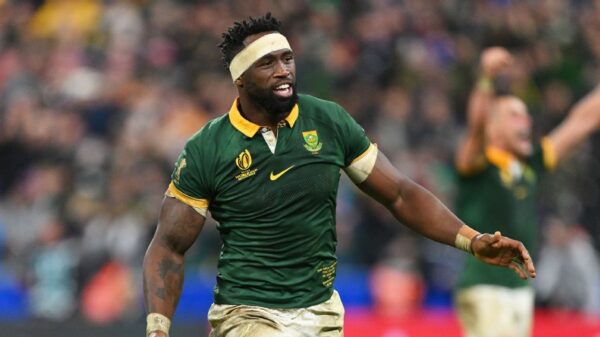
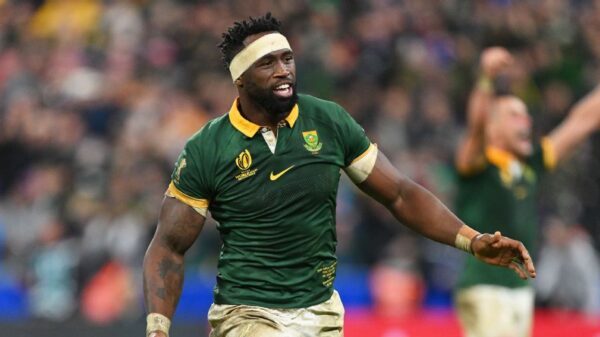


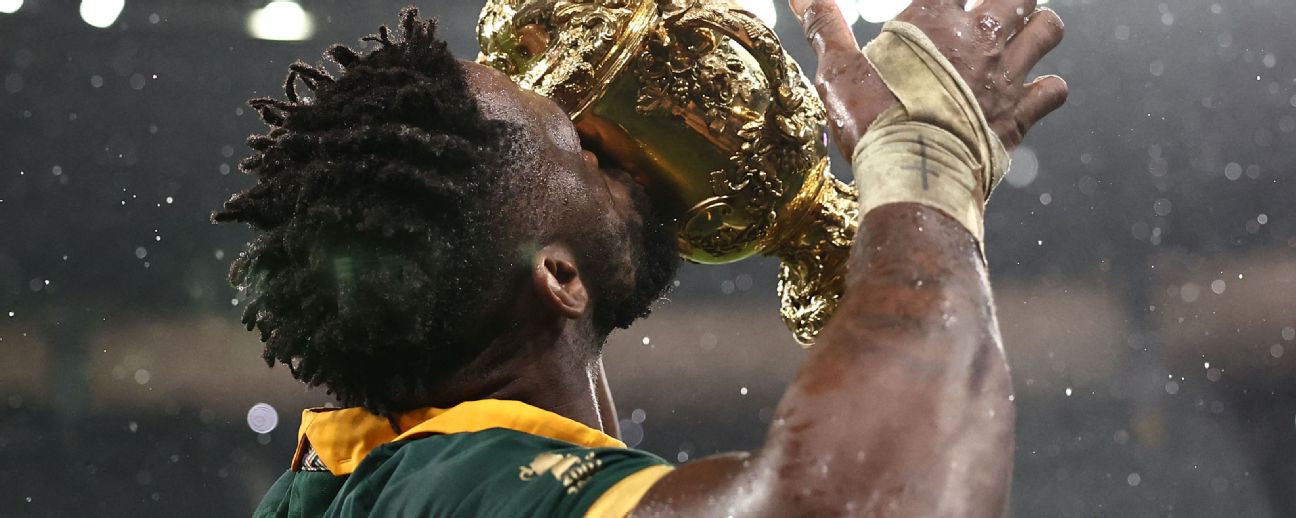
The Springboks are the undisputed masters of fine margins in Rugby World Cup history. Three one-point victories across the knockout stages culminated in Siya Kolisi lifting the Webb Ellis Cup for the second consecutive time, as South Africa edged New Zealand 12-11 in a breathless Paris final on 28 October 2023. If you could bottle the mental fortitude behind that result, you’d retire on the proceeds.
Springboks Rugby World Cup Win Seals Historic Fourth Title
South Africa became the first nation to claim four men’s Rugby World Cup titles, and this final deserves every superlative thrown at it. Referee Wayne Barnes expertly navigated a match defined by TMO intervention, split-second decisions, and players performing contortionist acts at the breakdown. The Stade de France — packed with 80,065 supporters — witnessed something truly immortal.
The match turned on pivotal flashpoints. Bongi Mbonambi departed after just three minutes when All Blacks flanker Shannon Frizzell’s reckless cleanout left his weight on the hooker’s leg. Frizzell received a yellow card, Mbonambi was gone, and Deon Fourie stepped in to play 77 gruelling minutes as a makeshift replacement. Then, in the 28th minute, All Blacks captain Sam Cane caught Jesse Kriel with a high shot. Initially sin-binned, Cane sat motionless as the TMO review concluded there was a high degree of danger with no clear mitigation — the card was upgraded to red. New Zealand would battle for more than half the match with 14 men. “There’s so much hurt right now,” Cane said afterwards. “It’s something I’m going to have to live with forever.”
Handré Pollard slotted four penalties to give South Africa a 12-6 lead at the break. However, the second half brought its own drama. Kolisi himself collected a yellow card in the 45th minute for contact with Ardie Savea’s head, though it remained yellow rather than escalating. Beauden Barrett crashed over in the 58th minute — the first try the Springboks had ever conceded in a World Cup final — and though Richie Mo’unga missed the touchline conversion, New Zealand were suddenly within a single point at 12-11. Read BBC Sport’s full Rugby World Cup coverage here.
Kolisi, Du Toit and a Collective Greater Than Any Individual
The closing stages were nerve-shredding. Cheslin Kolbe received a yellow card in the 73rd minute for a deliberate knock-on, burying his face in his shirt, unable to watch. Jordie Barrett missed a long-range penalty for New Zealand, a disallowed All Blacks try — finished by Aaron Smith following a Mo’unga break — was chalked off for a knock-on in the build-up, and the Boks held firm. Kolisi’s first act after the final whistle was to sprint to Kolbe and embrace him.
Pieter-Steph du Toit was colossal, delivering 28 tackles. Duane Vermeulen, at 37 years old, was superb. Kwagga Smith’s impact off the bench proved vital, while Ox Nche etched himself into World Cup folklore with a destructive display among the replacements. Faf de Klerk and Pollard controlled the contest brilliantly from half-back, and the controversial 7-1 forward-heavy bench split — with Willie le Roux as the sole specialist back among the replacements — ultimately paid off handsomely.
Former World Cup-winning captains John Smit and Francois Pienaar watched from the stands as witnesses to history. Kolisi’s place among rugby’s all-time greats was already assured, yet he enhanced it further — both with his performance and his words. “People who are not from South Africa don’t understand what it means for our country,” he said. “As soon as we work together, all is possible.”
Coach Jacques Nienaber departs for Leinster after this tournament, and this squad will never reassemble in quite the same shape. Nevertheless, three one-point knockout wins — unmatched mental strength made manifest — have cemented this Springboks generation as one of the greatest rugby sides ever assembled. The World Cup stays in South Africa for another four years. “I wouldn’t change the script,” Kolisi said. Neither would anyone who watched it.